Etsy Copyright vs Trademark: What's the Difference for Sellers?
Understand the difference between a copyright strike and a trademark strike on Etsy, and learn how to respond to each correctly to protect your shop.
Author
Paarath SharmaExecutive Takeaways
- Copyright protects creative works like art, photos, and designs.
- Trademark protects brand identifiers like names, logos, and slogans.
- Etsy handles both under their Intellectual Property policy, but the legal rules differ.
Introduction
You received a listing removal notice. The email mentions "intellectual property." But was it a copyright issue or a trademark issue? You are not sure. And that confusion matters. Responding to the wrong type of claim with the wrong strategy can waste your time and worsen your account standing. If you are trying to understand Etsy copyright vs trademark, you are asking the right question. This guide breaks down the difference in plain English, shows you real-world examples of each, and gives you a clear framework to respond correctly. No legal jargon. Just the clarity you need to protect your shop.
Copyright and Trademark Protect Different Things
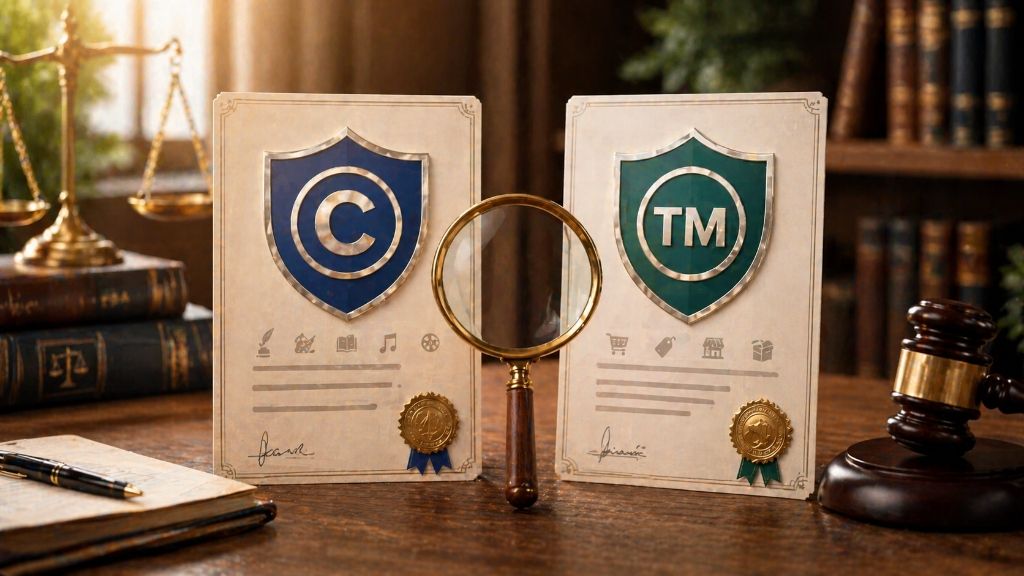
Copyright and trademark are both forms of intellectual property, but they protect entirely different assets. Understanding this distinction is the foundation of smart Etsy selling.
Copyright protects original creative works. This includes photographs, illustrations, digital artwork, song lyrics, poems, videos, and unique character designs. Copyright exists automatically when an original work is created and fixed in a tangible form.
Trademark protects brand identifiers. This includes brand names like Disney, Nike, or Starbucks, as well as logos, symbols, distinctive packaging, and slogans like "Just Do It."
How Etsy handles each type differently: Copyright claims typically follow the DMCA process. Learn more about the Etsy DMCA takedown workflow. Trademark claims follow Etsy's Intellectual Property Policy and often result in strikes. Understand the escalation path in our guide on Etsy trademark infringement strike.
Takeaway: Copyright protects creative expression. Trademark protects brand identity. Knowing which one applies to your situation determines your next move.
Common Mistakes Sellers Make When Confusing Copyright and Trademark
- Using "copyright" when they mean "trademark". A seller gets a strike for using Harry Potter in their tags and says, "I didn't copy their artwork, so it is not copyright." True, but it is trademark infringement. The brand name itself is protected.
- Filing a DMCA counter notice for a trademark issue. Counter notices are designed for copyright disputes under the DMCA.
- Assuming "I changed the artwork" solves a trademark problem. Redrawing Mickey Mouse in your style does not avoid trademark infringement if you still use the name Mickey.
- Thinking "I gave credit" avoids copyright claims. Adding "Art by Taylor Swift" or "Lyrics from Marvel movie" does not grant permission.
- Using brand names in tags "just for SEO". Adding Marvel, Barbie, or Taylor Swift to your tags to gain visibility is trademark use, not descriptive tagging.
How to Identify and Respond to IP Issues Correctly
Step 1: Read the Notice Carefully. Copyright notices often reference the DMCA and cite a specific creative work. Trademark notices often reference brand names and cite trademark registration numbers.
Step 2: Identify What Was Reported. Was it an image or artwork you didn't create? Likely copyright. Was it a brand name or logo? Likely trademark.
Step 3: Evaluate Your Use Objectively. Did you create all content yourself? Did you use any brand identifiers to describe your item?
Step 4: Choose the Right Response Path. For copyright claims, consider a DMCA counter notice if mistaken. For trademark claims, focus on removing infringing terms and auditing your shop.
Step 5: Audit Your Shop Proactively. Replace high-risk terms with generic, descriptive alternatives that maintain SEO value.
Step 6: Build a Prevention Workflow. Make compliance checks a standard part of your listing creation process, not an afterthought.
How to Simplify IP Protection: Make ListSecurely Your Single-Scan Solution
Understanding the legal distinction between copyright and trademark is important. But you should not have to become a legal expert to protect your shop. Pausing to research every term against multiple databases is exhausting and error-prone.
This is where ListSecurely becomes your essential workflow partner. Instead of trying to diagnose whether a risky term is a copyright issue or a trademark issue, use ListSecurely's Etsy Listing Compliance Checker. Paste your draft title, tags, and description into the scanner. In seconds, it cross-references your text against both copyright patterns and trademark databases to flag high-risk content before you publish.
Use the Etsy Trademark Checker for free
Think of ListSecurely as your pre-publish insurance policy. You do not need to perfectly understand the legal distinction between copyright and trademark. The tool handles the complexity for you.
Paarath Sharma
Founder & SEO Expert
Paarath Sharma is an SEO specialist and e-commerce software architect. After years of analyzing how search algorithms and marketplace policies evaluate listings, he built ListSecurely's compliance engine to help Etsy sellers protect their store visibility and avoid preventable algorithm penalties.